How to Replace the Air Filter on a Lawn Mower

The air filter is the first line of defense your lawn mower’s engine has against airborne dirt and debris. Because protecting your engine from damaging airborne particulates is so important for engine health, it is recommended that you check your lawn mower’s air filter two or three times a season. How often you actually change Read more…


How to Minimize Problems When Using Ethanol-Blended Gasoline

The Environmental Protection Agency (EPA) currently limits an ethanol-gasoline blend of 10% ethanol (or E10) as a standard transportation fuel. However, the agency recently granted the ethanol industry a waiver increasing the allowable limit to 15% ethanol (or E15) for use only in some motor vehicles.

My Toro is My First Choice…Even With a Missing Wheel!

Jeff M. shares his “My Toro Story”. How often do you find a piece of outdoor power equipment that is so reliable and that you enjoy using so much that you continue to do so even with a missing wheel? That is exactly what Jeff M., of Butte, MT, experienced with his Toro lawn mower. Read more…

Toro Starts on the First Time…Every Time

David shares his “My Toro Story” of reliability. “Every spring, I wonder if this will be the year my Toro doesn’t start on the first pull.” For ten years in a row, David Payne’s Toro hasn’t let him down. The feeling of starting spring projects and maintenance on your lawn can be one of excitement and Read more…

Tips for Topdressing Your Lawn

A green and healthy lawn starts, literally, from the ground up. One way to improve the look and health of your lawn is to improve the soil. While techniques such as aeration, changing mower height to adjust for how long you want your grass to be, spreading fertilizer, or reducing thatch can be great, sometimes Read more…

Summer Lawn Diseases | Protecting Your Lawn

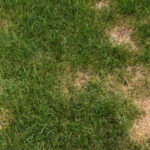
Brown Patch This disease is prevalent during moist, hot weather on over-fertilized lawns.  Brown patch, also known as rhizoctonia blight, is most active when grass remains wet and temperatures reach 80 to 90 degrees Fahrenheit. Look for: Dark, water-soaked looking grass turning into browned-out circular areas several inches to several feet in diameter. Some green Read more…

Adding Nutrients to Your Soil

Use a slow-release fertilizer, and avoid putting down more fertilizer than you need. Adding too much nitrogen can cause rapid growth and a thinning of plant cell walls, which makes grass more susceptible to disease. The excess fertilizer may also leach and eventually find its way into waterways, polluting them. Tested Soil When restoring a lawn, apply Read more…

Preparing to Overseed a Lawn

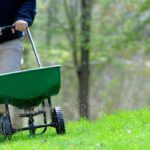
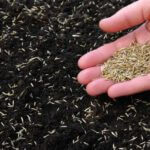
Before you begin, choose the seed that is best for your geographical area and buy the amount you need to cover the size of your lawn. You have several tool options for spreading seed evenly and at the recommended rates. They include your own hands, hand-held, and walk-behind spreaders, and slit-seeders (power seeders), which are Read more…

Taking Care of Young Plants

Your efforts to restore your lawn will be in vain if you do not care for the young grass plants as the seeds germinate and begin to grow. The most critical need is to apply water at least twice a day, assuming no rain. If the soil dries out, the seedlings will not germinate or will Read more…

Cool-Season Grasses | Choosing the Right Grass

Kentucky bluegrass (Poa pratensis) For a deep green, fine-textured, attractive lawn, choose Kentucky bluegrass.  Bluegrass is able to withstand moisture and temperature extremes, is winter hardy, and will grow in full sun to light shade depending on cultivar and location.  Sown by seed and spread by rhizomes and tillers, it forms strong, dense sod that Read more…

Toro logo

EXPLORE TORO

The tools you need to create and maintain a gorgeous yard, all in one place.

VISIT TORO.COM